 Ghar Se Padhai
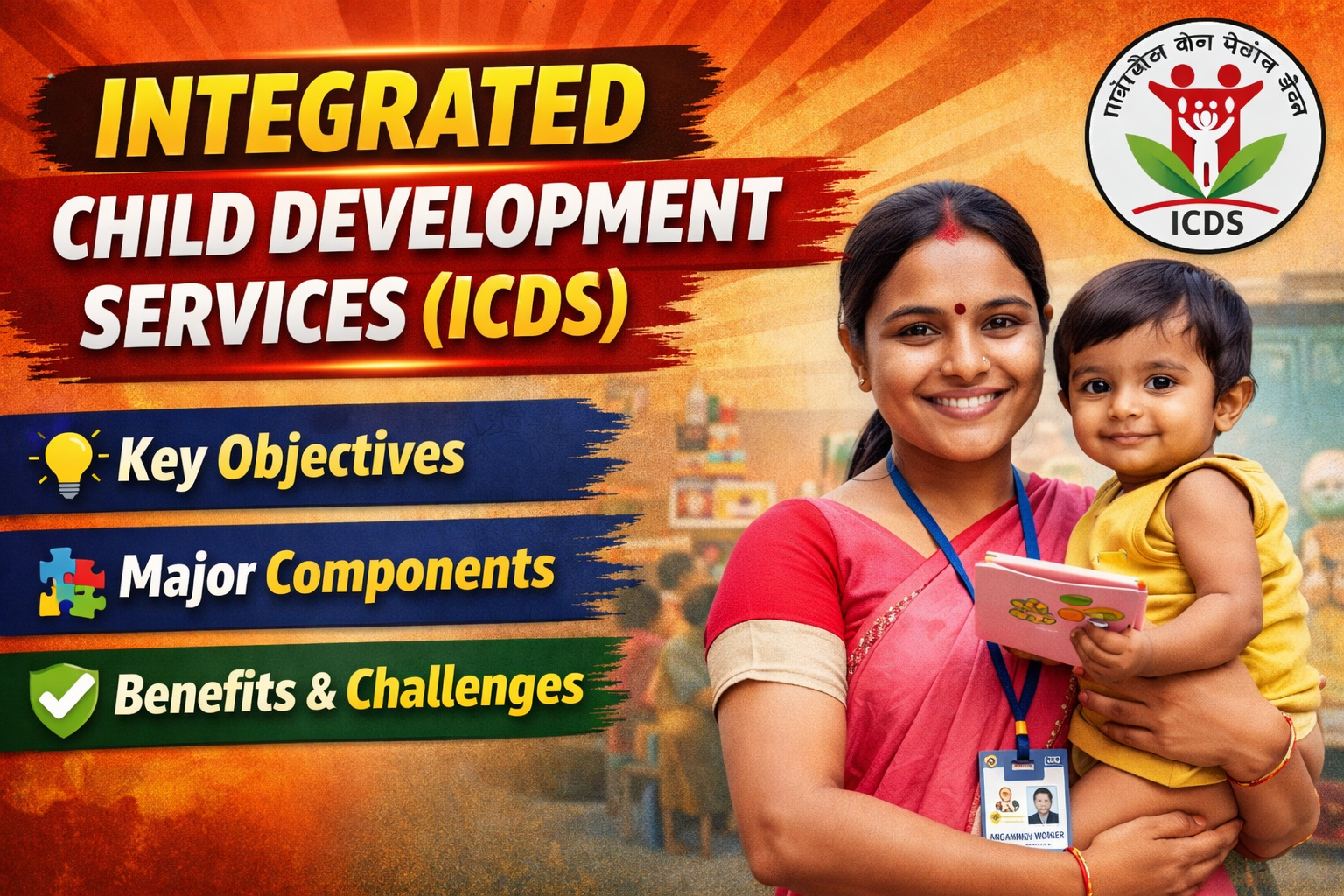
Integrated Child Development Services (ICDS) is one of the most significant welfare programs launched by the Government of India for the holistic development of children under the age of six years, pregnant women, and lactating mothers. It is a centrally sponsored scheme that aims to improve the health, nutrition, and education of young children and mothers.
ICDS is considered one of the world’s largest and most unique early childhood development programs. It focuses on reducing malnutrition, improving child health, and preparing children for formal schooling.
Historical Background
The ICDS scheme was launched on 2nd October 1975, on the birth anniversary of Mahatma Gandhi. The program was introduced to address the problems of malnutrition, poor health, and lack of early childhood education in India.
Initially, ICDS was implemented in a limited number of blocks, but due to its success and importance, it was expanded across the country. Today, ICDS covers almost all districts of India.
Objectives of ICDS
The main objectives of ICDS are:
- To improve the nutritional and health status of children aged 0–6 years.
- To lay the foundation for proper psychological, physical, and social development.
- To reduce child mortality, morbidity, and malnutrition.
- To promote early childhood education (ECE).
- To educate mothers about health, nutrition, and child care.
- To coordinate policies and implementation among different departments.
Target Beneficiaries
ICDS focuses on the following groups:
- Children (0–6 years)
- Pregnant women
- Lactating mothers
- Adolescent girls (in some schemes)
These groups are considered vulnerable and require special care for healthy development.
Services Provided under ICDS
ICDS provides a package of six essential services:
1. Supplementary Nutrition
Children and mothers are provided with nutritious food to combat malnutrition. This includes meals, snacks, and take-home rations.
2. Immunization
Children are immunized against diseases such as polio, measles, tuberculosis, and diphtheria.
3. Health Check-ups
Regular health check-ups are conducted to monitor the growth and health of children and mothers.
4. Referral Services
Severely ill or malnourished children and mothers are referred to hospitals or health centers.
5. Pre-school Non-formal Education
Children aged 3–6 years receive basic education to prepare them for school.
6. Nutrition and Health Education
Mothers are educated about proper nutrition, hygiene, and child care practices.
Anganwadi Centers
The services of ICDS are delivered through Anganwadi Centers, which are established in villages and urban slums.
Each Anganwadi is managed by an Anganwadi Worker (AWW) and a helper. These centers serve as the focal point for delivering ICDS services.
Functions of Anganwadi Centers include:
- Providing supplementary nutrition
- Conducting preschool activities
- Monitoring child growth
- Organizing health awareness programs
Organizational Structure
ICDS operates at multiple levels:
- Central Level: Ministry of Women and Child Development
- State Level: State Departments
- District Level: District Officers
- Project Level: Child Development Project Officer (CDPO)
- Local Level: Anganwadi Workers
This structure ensures smooth implementation and monitoring of the program.
Importance of ICDS
ICDS plays a crucial role in the development of children and society:
Child Development
It ensures proper physical and mental growth of children during their early years.
Reduction in Malnutrition
The program helps reduce malnutrition among children and mothers.
Education
Pre-school education prepares children for formal schooling.
Women Empowerment
By educating mothers, ICDS empowers women to take better care of their families.
Role of ICDS in Rural Development
ICDS is especially important in rural areas where access to healthcare and education is limited. It helps improve living standards and promotes awareness among communities.
Achievements of ICDS
Over the years, ICDS has achieved several milestones:
- Expansion across India
- Reduction in child malnutrition
- Increased awareness about health and hygiene
- Improved school readiness among children
Challenges Faced by ICDS
Despite its success, ICDS faces several challenges:
- Inadequate infrastructure
- Shortage of staff
- Poor quality of services in some areas
- Lack of awareness among beneficiaries
Recent Reforms and Improvements
The government has introduced reforms to strengthen ICDS:
- Digitization of services
- Better monitoring systems
- Improved nutrition programs
- POSHAN Abhiyaan (National Nutrition Mission)
ICDS and POSHAN Abhiyaan
POSHAN Abhiyaan aims to reduce stunting, undernutrition, and anemia. It complements ICDS by improving service delivery and monitoring.
Conclusion
Integrated Child Development Services (ICDS) is a vital program for the development of children and mothers in India. It addresses key issues such as malnutrition, health, and education.
By focusing on early childhood care, ICDS helps build a strong foundation for the nation’s future. Strengthening this program will ensure a healthier, educated, and empowered society.
In conclusion, ICDS is not just a welfare scheme but a powerful initiative for nation-building and human resource development.