 Ghar Se Padhai
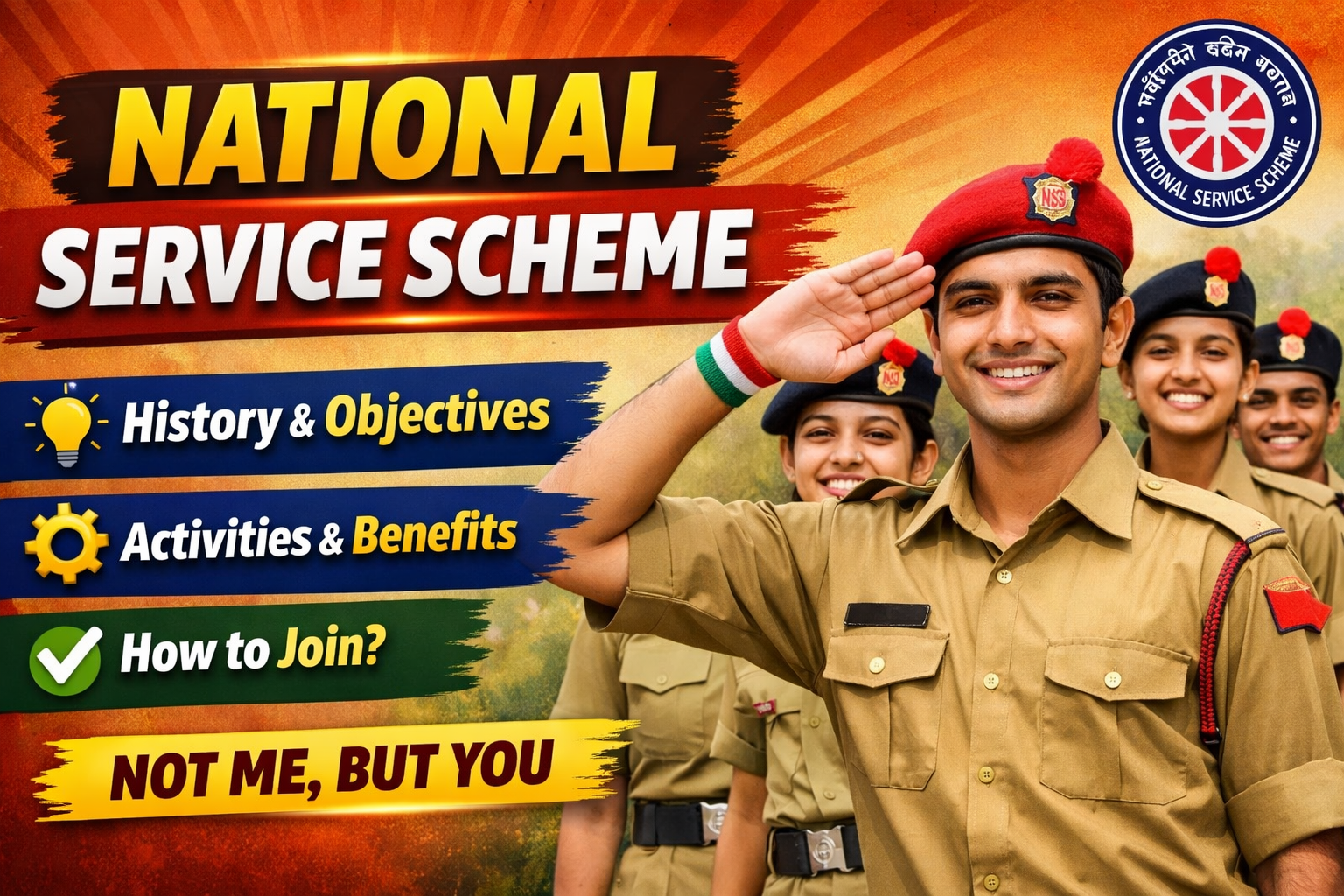
The National Service Scheme (NSS) is a flagship public service program in India that aims to develop the personality and character of students through community service. Established with the vision of creating socially responsible citizens, NSS plays a crucial role in bridging the gap between academic knowledge and practical social engagement. It provides young individuals with opportunities to participate in nation-building activities and understand the realities of rural and urban communities.
The motto of NSS, "Not Me But You," reflects the essence of democratic living and the need for selfless service. It emphasizes the importance of placing the welfare of society above individual interests. NSS has become one of the most significant youth-oriented programs in India, involving millions of students across schools, colleges, and universities.
Historical Background
The idea of involving students in national service was first proposed by Mahatma Gandhi, who believed that education should not be limited to theoretical knowledge but should also include practical work for the upliftment of society. After independence, several committees and educationists supported the idea of student involvement in community service.
The National Service Scheme was officially launched on 24th September 1969, during the birth centenary year of Mahatma Gandhi. Initially, the program started with 40,000 student volunteers across 37 universities. Over time, it expanded significantly and is now operational in thousands of institutions across India.
Objectives of NSS
The primary objectives of the National Service Scheme are centered around the overall development of students and their active participation in community welfare. Some of the key objectives include:
- To understand the community in which students work.
- To identify the needs and problems of the community.
- To involve students in problem-solving processes.
- To develop a sense of social and civic responsibility.
- To utilize students’ knowledge in practical ways.
- To develop leadership qualities among youth.
- To promote national integration and social harmony.
- To build self-confidence and a sense of dignity of labor.
Motto and Symbol
The motto of NSS, "Not Me But You," highlights the importance of selfless service. It teaches students to think beyond personal gains and contribute to the welfare of society.
The NSS symbol is based on the wheel of the Konark Sun Temple in Odisha. The wheel represents the cycle of creation, preservation, and release, signifying the continuous process of life. The eight bars in the wheel represent 24 hours of the day, indicating that NSS volunteers are ready to serve the nation at all times.
Organizational Structure
The National Service Scheme operates under the Ministry of Youth Affairs and Sports, Government of India. The structure of NSS is organized at different levels:
- National Level: Managed by the Ministry of Youth Affairs and Sports.
- State Level: Coordinated by State NSS Cells.
- University Level: Managed by NSS program coordinators.
- Institution Level: Each college or school has NSS units led by program officers.
Each NSS unit typically consists of 100 student volunteers who actively participate in various activities throughout the year.
Activities of NSS
NSS activities are broadly divided into two categories: Regular Activities and Special Camping Programs.
Regular Activities
Regular activities include day-to-day community service tasks such as:
- Tree plantation drives
- Cleanliness campaigns
- Blood donation camps
- Awareness programs on health and hygiene
- Literacy campaigns
- Environmental protection initiatives
- Road safety awareness
These activities help students engage with society regularly and understand social issues firsthand.
Special Camping Programs
Special camps are usually organized for seven days in rural or urban slum areas. During these camps, volunteers stay in the community and work intensively on specific issues such as sanitation, water conservation, and rural development.
Special camps provide students with a deeper understanding of community life and help them develop teamwork and leadership skills.
Importance of NSS
The National Service Scheme holds great importance in shaping the youth of India. It contributes to both personal and social development.
Personality Development
NSS helps students develop essential life skills such as communication, leadership, teamwork, and problem-solving. It enhances their confidence and prepares them for future challenges.
Social Awareness
Through NSS activities, students become aware of social issues such as poverty, illiteracy, and environmental degradation. This awareness encourages them to contribute to society positively.
National Integration
NSS promotes unity and harmony among people from different backgrounds. It helps students understand cultural diversity and fosters a sense of national pride.
Skill Development
Volunteers gain practical experience in organizing events, managing resources, and working in teams. These skills are valuable for their professional careers.
Role of NSS in Community Development
NSS plays a vital role in community development by addressing local issues and promoting sustainable practices. Volunteers work closely with communities to identify problems and implement solutions.
Some key contributions include:
- Improving sanitation and hygiene
- Promoting education and literacy
- Supporting health awareness campaigns
- Encouraging environmental conservation
- Assisting in disaster management and relief work
NSS and Education
NSS complements formal education by providing experiential learning opportunities. It allows students to apply theoretical knowledge in real-life situations.
Many educational institutions consider NSS participation as an important component of holistic education. In some cases, students receive certificates and academic credits for their involvement.
Benefits of Joining NSS
Joining NSS offers numerous benefits to students:
- Development of leadership and organizational skills
- Enhanced social awareness and empathy
- Opportunities to work in diverse environments
- Recognition through certificates and awards
- Improved career prospects
NSS certificates are often valued in job applications and higher education admissions.
Challenges Faced by NSS
Despite its success, NSS faces several challenges:
- Lack of adequate funding and resources
- Limited awareness among students
- Inconsistent participation
- Administrative issues in some institutions
Addressing these challenges is essential to enhance the effectiveness of NSS programs.
NSS Awards and Recognition
The Government of India recognizes outstanding NSS volunteers, program officers, and units through various awards. These awards motivate participants to contribute more actively.
Awards are given at national, state, and university levels, highlighting exceptional service and dedication.
NSS in the Modern Era
In the modern era, NSS has adapted to changing societal needs. It now focuses on issues such as digital literacy, climate change, gender equality, and health awareness.
Volunteers are also involved in campaigns related to Swachh Bharat Abhiyan, Fit India Movement, and COVID-19 awareness programs.
Conclusion
The National Service Scheme is a powerful platform for youth development and community service. It instills values of selflessness, discipline, and social responsibility among students. By participating in NSS, students not only contribute to society but also gain valuable life experiences that shape their future.
NSS continues to play a significant role in building a strong and united nation. Its impact on individuals and communities makes it an essential part of India’s educational and social framework.
In conclusion, the National Service Scheme is not just a program but a movement that inspires young minds to work for the betterment of society and the nation as a whole.