 Ghar Se Padhai
Introduction
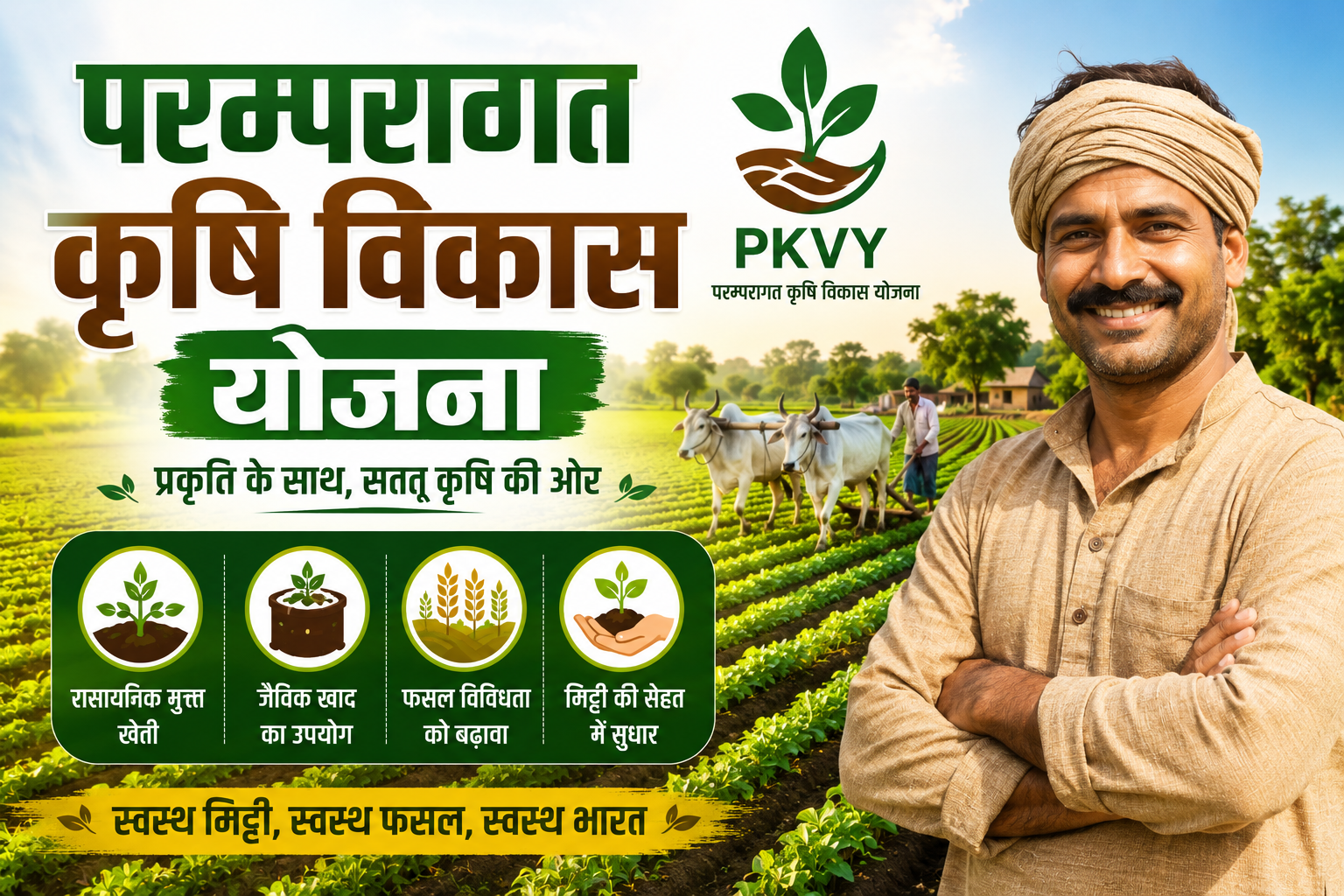
Agriculture is one of the most important sectors of the Indian economy. A large portion of India’s population depends on farming for livelihood. However, over the years, the excessive use of chemical fertilizers, pesticides, and insecticides has negatively affected soil fertility, human health, and the environment. To encourage sustainable and eco-friendly farming, the Government of India launched the Paramparagat Krishi Vikas Yojana (PKVY).
The scheme was launched in 2015 under the Ministry of Agriculture and Farmers Welfare as a part of the **Soil Health Management program under the National Mission on Sustainable Agriculture (NMSA).
The primary aim of PKVY is to promote organic farming across India through the use of traditional agricultural practices. The scheme encourages farmers to reduce dependence on chemical inputs and adopt environmentally friendly farming methods.
The scheme focuses on:
- Sustainable agriculture
- Soil health improvement
- Organic food production
- Reduction in environmental pollution
- Increase in farmer income
2. Meaning of Organic Farming
Organic farming is a farming system that avoids the use of:
- Chemical fertilizers
- Synthetic pesticides
- Harmful insecticides
- Genetically modified organisms (GMOs)
Instead, it uses:
- Natural manure
- Compost
- Bio-fertilizers
- Crop rotation
- Green manure
- Biological pest control
Organic farming improves soil fertility and protects the environment.
3. Background of PKVY
India has traditionally practiced natural and organic farming methods for centuries. However, after the Green Revolution, farmers increasingly started using chemical fertilizers and pesticides to increase crop production.
Although the Green Revolution improved food production, it also created several problems:
- Soil degradation
- Water pollution
- Loss of biodiversity
- Health risks due to chemicals
- Declining soil fertility
To address these issues, the Government launched Paramparagat Krishi Vikas Yojana to revive traditional agricultural practices and promote organic farming.
4. Objectives of PKVY
The scheme has several important objectives.
1. Promote Organic Farming
The main goal is to encourage farmers to adopt organic farming practices instead of chemical-based agriculture.
2. Improve Soil Fertility
Organic farming improves soil structure and fertility naturally.
3. Reduce Chemical Usage
The scheme aims to reduce dependence on:
- Chemical fertilizers
- Synthetic pesticides
- Toxic insecticides
4. Produce Healthy Food
Organic farming helps produce chemical-free and nutritious food.
5. Protect Environment
The scheme supports:
- Water conservation
- Biodiversity protection
- Reduced pollution
6. Increase Farmer Income
Organic products often get better prices in the market, increasing farmer earnings.
7. Promote Sustainable Agriculture
PKVY encourages environmentally sustainable farming methods for future generations.
5. Key Features of PKVY
The scheme has several unique features.
1. Cluster-Based Approach
PKVY follows a cluster approach.
What is a Cluster?
A cluster consists of:
- 50 or more farmers
- Covering 50 acres or more land
Farmers work together to practice organic farming.
Benefits:
- Easier training
- Better coordination
- Cost reduction
- Improved marketing
2. Participatory Guarantee System (PGS)
PKVY uses the Participatory Guarantee System (PGS) for organic certification.
What is PGS?
PGS is a locally focused quality assurance system in which farmers certify each other’s organic farming practices.
Advantages:
- Low-cost certification
- Simple process
- Farmer participation
3. Financial Assistance
Farmers receive financial support for:
- Organic inputs
- Training
- Certification
- Marketing
4. Traditional Knowledge Promotion
The scheme promotes traditional agricultural methods and indigenous farming knowledge.
6. Financial Assistance under PKVY
Under PKVY, financial assistance is provided to farmers for three years.
Assistance Amount
The government provides approximately:
₹50,000 per hectare for 3 years
Distribution of Funds
The assistance is used for:
- Organic manure
- Bio-fertilizers
- Vermicompost
- Training programs
- Certification costs
- Marketing support
A large portion of the amount goes directly to farmers.
7. Components of PKVY
PKVY includes several important components.
A. Organic Farming Promotion
Farmers are encouraged to use:
- Compost
- Cow dung manure
- Bio-fertilizers
- Green manure
B. Farmer Training
Training programs educate farmers about:
- Organic cultivation
- Pest management
- Compost preparation
- Soil management
C. Organic Certification
Farmers receive certification through the Participatory Guarantee System.
D. Marketing Support
The scheme helps farmers market organic products through:
- Organic fairs
- Direct marketing
- Branding support
8. Organic Inputs Used in PKVY
Organic farming under PKVY promotes the use of natural inputs.
1. Vermicompost
Prepared using earthworms and organic waste.
Benefits:
- Improves soil fertility
- Enhances microbial activity
2. Green Manure
Plants are grown and mixed into soil to improve fertility.
3. Bio-Fertilizers
Natural microorganisms help provide nutrients to plants.
4. Neem-Based Pesticides
Used for eco-friendly pest control.
9. Importance of Organic Farming
Organic farming provides multiple benefits.
A. Environmental Benefits
1. Soil Conservation
Organic farming improves soil health naturally.
2. Water Protection
Reduces water pollution caused by chemicals.
3. Biodiversity Conservation
Protects beneficial insects, birds, and microorganisms.
4. Reduced Carbon Emissions
Organic farming supports climate-friendly agriculture.
B. Health Benefits
1. Chemical-Free Food
Organic food contains fewer harmful chemicals.
2. Better Nutrition
Organic produce is considered healthier and more nutritious.
C. Economic Benefits
1. Higher Market Price
Organic products often sell at premium prices.
2. Reduced Input Cost
Farmers spend less on chemical fertilizers and pesticides.
10. Role of Farmers in PKVY
Farmers are central to the success of the scheme.
They are encouraged to:
- Form clusters
- Adopt organic practices
- Participate in training
- Avoid harmful chemicals
Farmer participation ensures effective implementation.
11. Certification Process under PKVY
Organic certification is important for selling organic products.
Participatory Guarantee System (PGS)
Process:
- Farmers form groups
- Peer inspection is conducted
- Organic standards are verified
- Certification is granted
Benefits:
- Simple
- Affordable
- Farmer-friendly
12. Marketing of Organic Products
PKVY supports marketing through:
- Organic bazaars
- Farmer markets
- Online platforms
- Branding and packaging
This helps farmers get better prices.
13. Benefits of PKVY
The scheme provides several important benefits.
A. Benefits to Farmers
1. Increased Income
Organic products have high market demand.
2. Lower Input Cost
Natural fertilizers reduce expenditure.
3. Long-Term Soil Fertility
Organic farming improves soil health.
B. Benefits to Consumers
1. Safe Food
Consumers get chemical-free food products.
2. Better Health
Reduced exposure to harmful chemicals.
C. Environmental Benefits
1. Pollution Reduction
Organic farming reduces chemical pollution.
2. Sustainable Agriculture
Supports long-term ecological balance.
14. Achievements of PKVY
Since its launch, PKVY has achieved several milestones.
1. Increase in Organic Farming Area
Large areas of land have been converted to organic farming.
2. Farmer Participation
Lakhs of farmers have joined organic farming clusters.
3. Organic Product Promotion
Organic products are gaining popularity in India and abroad.
4. Awareness Generation
More farmers are becoming aware of sustainable farming.
15. Challenges Faced by PKVY
Despite its benefits, the scheme faces several challenges.
1. Low Awareness
Many farmers still lack knowledge about organic farming.
2. Initial Yield Reduction
Crop yield may decrease during the transition period.
3. Certification Issues
Certification processes can sometimes be slow.
4. Marketing Problems
Farmers may face difficulty finding markets for organic products.
5. Lack of Infrastructure
Storage and transportation facilities for organic products are limited in some areas.
16. Government Efforts to Improve PKVY
The government has taken several steps to strengthen the scheme.
1. Training Programs
Farmers receive regular training and awareness programs.
2. Financial Incentives
Subsidies encourage adoption of organic farming.
3. Market Development
Organic fairs and online platforms help farmers sell products.
4. Research Support
Research institutions promote improved organic farming methods.
17. PKVY and Sustainable Development
PKVY contributes to sustainable development goals.
Supports:
- Zero Hunger
- Good Health
- Clean Environment
- Climate Action
- Sustainable Agriculture
The scheme promotes eco-friendly and sustainable farming systems.
18. PKVY and Climate Change
Organic farming helps combat climate change by:
- Reducing chemical pollution
- Increasing carbon storage in soil
- Improving water retention
It promotes climate-resilient agriculture.
19. Future Scope of PKVY
The future of organic farming in India is promising.
Suggested Improvements:
- Expand organic markets
- Increase awareness
- Improve certification systems
- Strengthen supply chains
- Increase export opportunities
India has huge potential to become a global leader in organic farming.
20. Conclusion
The Paramparagat Krishi Vikas Yojana (PKVY) is an important initiative by the Government of India to promote organic farming and sustainable agriculture. The scheme encourages farmers to return to traditional farming methods that protect soil health, conserve water, and produce safe food.
Through:
- Financial assistance
- Farmer training
- Organic certification
- Marketing support
PKVY has helped thousands of farmers adopt organic farming practices.
The scheme not only benefits farmers economically but also protects the environment and public health. With proper implementation, awareness, and market support, PKVY can play a major role in transforming Indian agriculture into a sustainable and eco-friendly system for the future.