 Ghar Se Padhai
Introduction
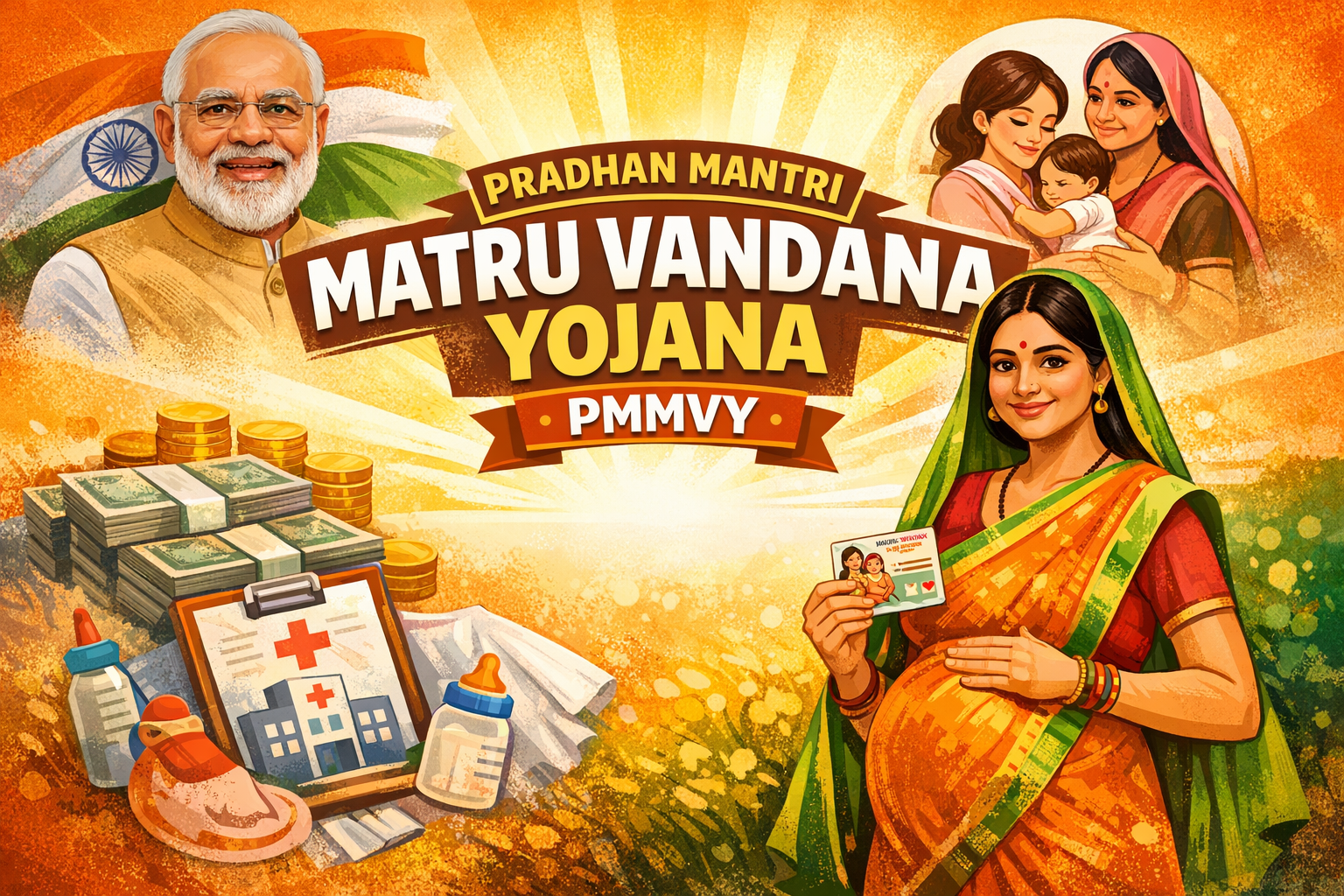
Pradhan Mantri Matru Vandana Yojana (PMMVY) is a maternity benefit scheme launched by the Government of India to support pregnant and lactating women. The main objective of this scheme is to provide financial assistance and nutritional support to pregnant women so that they can take proper rest before and after childbirth and maintain good health for themselves and their babies.
The scheme focuses mainly on women who are pregnant for the first time and belong to economically weaker sections of society. By offering financial assistance, the government aims to reduce maternal mortality, improve child health, and promote institutional deliveries.
PMMVY is implemented by the Ministry of Women and Child Development and is executed through the nationwide network of Anganwadi Centers under the Integrated Child Development Services (ICDS).
2. Background of the Scheme
Before PMMVY, India had a maternity benefit program called the Indira Gandhi Matritva Sahyog Yojana (IGMSY). However, IGMSY was implemented only in selected districts and had limited coverage.
To expand the benefits across the country, the Government of India launched the Pradhan Mantri Matru Vandana Yojana in 2017. The scheme was introduced as part of the government's commitment to maternal and child welfare and to support the goals of Sustainable Development Goals (SDGs) related to maternal health.
The scheme was launched under the leadership of Narendra Modi, the Prime Minister of India, with the aim of improving the health and nutrition of pregnant women.
3. Objectives of PMMVY
The scheme has several important objectives:
1. Provide Financial Assistance
PMMVY provides cash incentives to pregnant women to compensate for wage loss during pregnancy and after childbirth.
2. Promote Proper Nutrition
The scheme ensures that women receive nutritious food and health care during pregnancy.
3. Encourage Institutional Deliveries
It encourages women to give birth in hospitals or health centers instead of home deliveries.
4. Reduce Maternal Mortality Rate
By improving health care access and nutrition, the scheme helps reduce maternal deaths during pregnancy and childbirth.
5. Improve Child Health
Healthy mothers give birth to healthier children, which helps reduce infant mortality rate.
4. Key Features of PMMVY
Some major features of the scheme are:
1. Conditional Cash Transfer
PMMVY is a conditional cash transfer scheme, meaning women receive financial benefits only after meeting certain health conditions such as antenatal checkups and child immunization.
2. Nationwide Coverage
The scheme is implemented across all states and union territories of India.
3. Focus on First Child
Initially, the scheme provided benefits mainly for the first living child of the mother.
4. Direct Benefit Transfer
The money is transferred directly to the beneficiary’s bank account through Direct Benefit Transfer (DBT).
5. Digital Monitoring System
The scheme is monitored through a digital platform called PMMVY-CAS (Common Application Software).
5. Financial Assistance Provided
Under PMMVY, eligible women receive a total financial assistance of ₹5000.
This amount is provided in three installments:
First Installment – ₹1000
This installment is given when the woman registers pregnancy early at an Anganwadi center or health facility.
Second Installment – ₹2000
This installment is provided after the woman completes at least one antenatal check-up after six months of pregnancy.
Third Installment – ₹2000
This installment is provided after:
- Childbirth
- First cycle of immunization of the child
This financial assistance helps the mother take proper care during pregnancy and after delivery.
6. Eligibility Criteria
To receive benefits under PMMVY, certain eligibility conditions must be fulfilled.
Eligible Women
The following women are eligible:
- Pregnant women aged 19 years or above
- Women who are pregnant with their first child
- Women belonging to economically weaker households
- Women not employed in government jobs or public sector undertakings
Not Eligible
The following women are not eligible:
- Women who are government employees
- Women already receiving maternity benefits under other schemes
- Women who are income tax payers
7. Required Documents
To apply for PMMVY, the following documents are generally required:
- Aadhaar Card
- Bank Account Details
- Mother and Child Protection (MCP) Card
- Pregnancy Registration Certificate
- Identity Proof
- Address Proof
These documents help verify the eligibility of the beneficiary.
8. Application Process
Women can apply for PMMVY through offline or online methods.
Offline Application
- Visit the nearest Anganwadi Center
- Meet the Anganwadi Worker (AWW)
- Fill the PMMVY application form
- Submit required documents
- The Anganwadi worker uploads the information into the PMMVY system.
Online Application
Applicants can also apply through:
- PMMVY official portal
- Common Service Centers (CSCs)
The application is verified by local authorities before approval.
9. Implementation Mechanism
The scheme is implemented through a multi-level administrative structure.
National Level
At the national level, the scheme is managed by the **Ministry of Women and Child Development.
State Level
Each state government appoints state-level monitoring units to supervise implementation.
District Level
District officials monitor the performance of the scheme and ensure proper fund distribution.
Local Level
At the grassroots level, Anganwadi Workers and ASHA workers play a key role in registering beneficiaries and monitoring maternal health.
10. Role of Anganwadi Centers
Anganwadi centers are essential for implementing PMMVY.
Their responsibilities include:
- Registering pregnant women
- Providing nutrition counseling
- Conducting health awareness programs
- Monitoring pregnancy and child health
These centers are part of the **Integrated Child Development Services program.
11. Benefits of PMMVY
The scheme provides several benefits to women and society.
1. Financial Security
Pregnant women often stop working during pregnancy. PMMVY provides financial assistance to compensate for loss of wages.
2. Better Nutrition
Women can use the financial assistance to purchase nutritious food.
3. Improved Maternal Health
Regular checkups help detect complications early.
4. Reduced Infant Mortality
Healthy mothers lead to healthier babies.
5. Increased Institutional Deliveries
The scheme encourages women to give birth in hospitals rather than at home.
12. PMMVY 2.0 (Updated Version)
The government later introduced PMMVY 2.0 to improve the scheme.
Key changes include:
- Benefits extended to second child if the second child is a girl
- Improved digital monitoring system
- Better transparency in payment
This change aims to promote gender equality and support families with girl children.
13. Integration with Other Government Schemes
PMMVY works together with several other health schemes.
1. Janani Suraksha Yojana
Encourages institutional deliveries.
2. POSHAN Abhiyaan
Focuses on improving nutrition among mothers and children.
3. Ayushman Bharat
Provides health insurance coverage to poor families.
Together, these programs strengthen maternal and child health services.
14. Challenges in Implementation
Despite its benefits, PMMVY faces several challenges.
1. Awareness Issues
Many women in rural areas are not aware of the scheme.
2. Documentation Problems
Some beneficiaries face difficulty in submitting required documents.
3. Delays in Payment
In some cases, delays occur in transferring money.
4. Limited Coverage
Initially, the scheme covered only the first child, which excluded many women.
15. Government Efforts to Improve the Scheme
To improve the effectiveness of PMMVY, the government has taken several steps.
These include:
- Increasing awareness through health campaigns
- Digitalizing the registration process
- Monitoring payments through DBT systems
- Training Anganwadi workers
These improvements help ensure that benefits reach eligible women.
16. Impact of PMMVY
The scheme has made a positive impact on maternal and child health in India.
Some key outcomes include:
- Increase in early pregnancy registration
- Improvement in antenatal care
- Better awareness about nutrition and health
- Reduction in maternal health risks
The scheme has benefited millions of pregnant women across India.
17. Importance for Women Empowerment
PMMVY also contributes to women empowerment.
It provides:
- Financial independence
- Better access to healthcare
- Improved awareness of maternal health
These factors help women make better decisions about their health and family.
18. Future Prospects
Experts suggest several improvements for the scheme.
These include:
- Increasing financial assistance
- Expanding coverage to all pregnancies
- Simplifying the application process
- Strengthening monitoring systems
Such reforms can make the scheme more effective.
19. Conclusion
The Pradhan Mantri Matru Vandana Yojana is an important maternity benefit program aimed at improving maternal and child health in India. By providing financial assistance, encouraging health checkups, and promoting institutional deliveries, the scheme helps ensure safe motherhood and healthy childhood.
Despite some challenges, PMMVY has significantly improved the health and welfare of pregnant women, especially those from economically weaker sections of society. With continuous improvements and better implementation, the scheme has the potential to further strengthen maternal healthcare in India.